[ad_1]

Gaming
In its review upon the gameâs release in 2008, GamesRadar called Liberty City âthe biggest reason to delve into GTA IVâ. Its writers said it was âeasily 100 times more detailedâ than the map of its predecessor, Grand Theft Auto: San Andreas, concluding that altogether, the city was âconvincingly like the real thingâ.
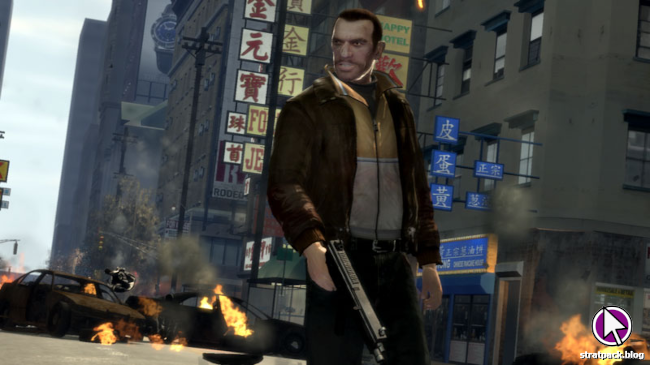
It truly was like nothing weâd ever seen. Spanning three islands totalling just over six square miles, GTA IVâs map was nowhere near as expansive as the region depicted by Rockstarâs 2004 title, but it was perhaps the densest video game setting ever built in terms of population and detail – and certainly in character.
For players focused on the story and the violence, many of the small touches that made Liberty City such a great virtual city probably passed by unnoticed. But even then, they undoubtedly felt that what they were playing was a premium product, even if they didnât know why. My goal in this article is to pick apart those minutae that make GTA IVâs world such a compelling imitiation of a real-life city.
A design for life(like cities)
Before we even step off the boat and set foot in Liberty City, we should establish what makes a good virtual city. In my estimation, itâs a mix of a few factors:
- Static features â This is the brick and mortar that makes up the city. How convincing are the buildings, the streets, and the other base details?
- Dynamic features â The moving parts – traffic, pedestrians, day/night cycle, weather, and so on – that complete the illusion of a living city
- Interactivity â The player needs interesting things to do (I wrote about how much better GTA IV is at this than GTA V in a previous post)
Lots of games get one or two of those right, but rarely all three.
For example, Watch Dogs 2 features a convincing recreation of mid-2010s San Francisco and allows for interesting player interactions via its unique hacking mechanics, but to me its inhabitants feel much more robotic than the NPCs in Rockstar games.
Liberty Cityâs successor â the version of Los Santos presented in Grand Theft Auto V â comes close, but it falls short at the final hurdle. The playground is beautiful and faithful to the real area, but the developers dropped many features from GTA IV that one could argue pushed it more in the direction of an immersive sim. Instead, it leant towards engineering action at the expense of realism.
Thatâs not to say that these alternatives arenât fun to play in, but they exist to support mechanics and stories, rather than the other way around. Strip away the main characters, the guns, and the adrenaline, and Liberty City is the only video game city that is capable of making me feel something all by itself.
The land of opportunity
That said, GTA IVâs story does amplify Liberty Cityâs impact. The main character, Niko Bellic, arrives from eastern Europe after being smuggled into the US aboard a cargo ship. He has come to chase the American dream, as promised by his cousin Roman, who in the opening scene declares the two will ârule the worldâ.
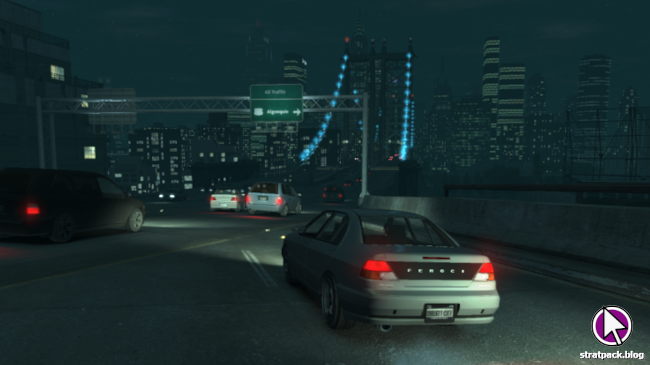
With the glittering lights of Algonquin (the gameâs stand-in for Manhattan) visible over the water, itâs difficult not to feel excited about what lies in wait. It doesnât work out quite so smoothly, but here are two characters setting out to capitalise on the âland of opportunityâ â unlike GTA Vâs protagonists, who are all either indifferent to (or worse, disillusioned with) Los Santos from the very beginning.
I wonât spoil the story here, but the optimism doesnât last long. Niko discovers that Roman was lying about his âmansionâ and high-flying life, and ironically it is his attempts at defending his cousin from loan sharks that lead him into a series of escalating crimes and entanglements that leave him just as bitter and jaded as he was when he decided to emigrate from his home country to America.
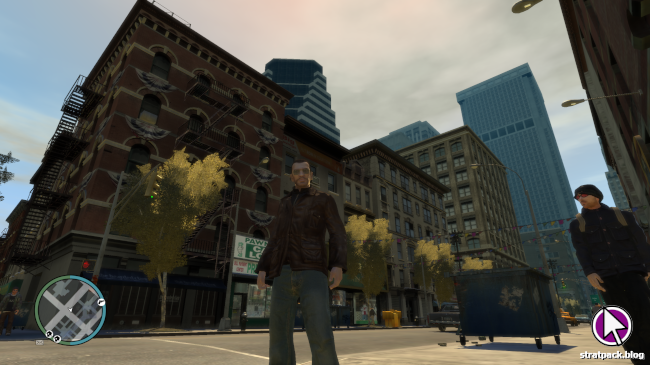
Virtual cities often fall flat once the story is complete, feeling less convincing without any unique content to entertain the player. But Liberty City is far more than just a vessel for GTA IVâs main campaign. Such is the attention to detail and craftsmanship on display that even now, more than 15 years after I first finished the game and watched the credits roll, I still load it up from time to time and take a stroll or drive through its streets and soak up the ambience.
The tech behind the towers
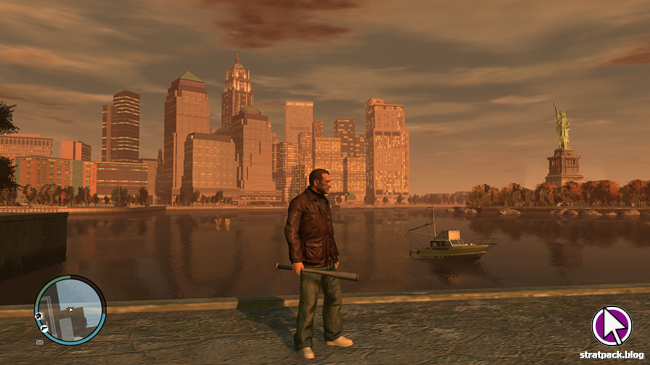
GTA IV was optimised for the Xbox 360 and PlayStation 3, and that works to Liberty Cityâs advantage. The central area features recreations of many New York landmarks – the Statue of Liberty, Central Park, Times Square, and Grand Central Station to name just a few – but is a much condensed version of Manhattan, with each north-to-south block accounting for about ten real-life blocks.
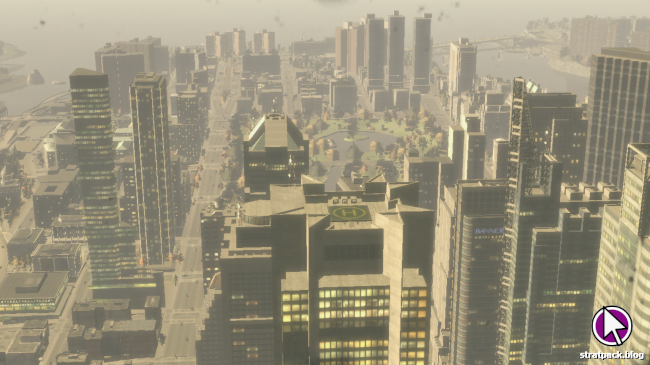
With representation of each New York district limited to just a few streets, the short draw distance helps them to feel distinct – it wouldnât feel right if you could see every Downtown tower from the East Village, for example. Clever use of these limits on visibility help to make the map seem bigger than it is, and the only time it feels game-like is at the top of the Empire State Building stand-in (even more so if you look straight down), where itâs impossible to hide its full expanse.
While weâre talking technology and the way itâs used in the cityâs design, we should address the elephant in the room. Many lament the ubiquitous âpiss filterâ that plagued the games of the mid-2000s, and I agree that in many cases it was unnecessary, but itâs not overbearing in GTA IV, and it suits the griminess of Liberty City. Iâm not sure what that says about real-life New York.
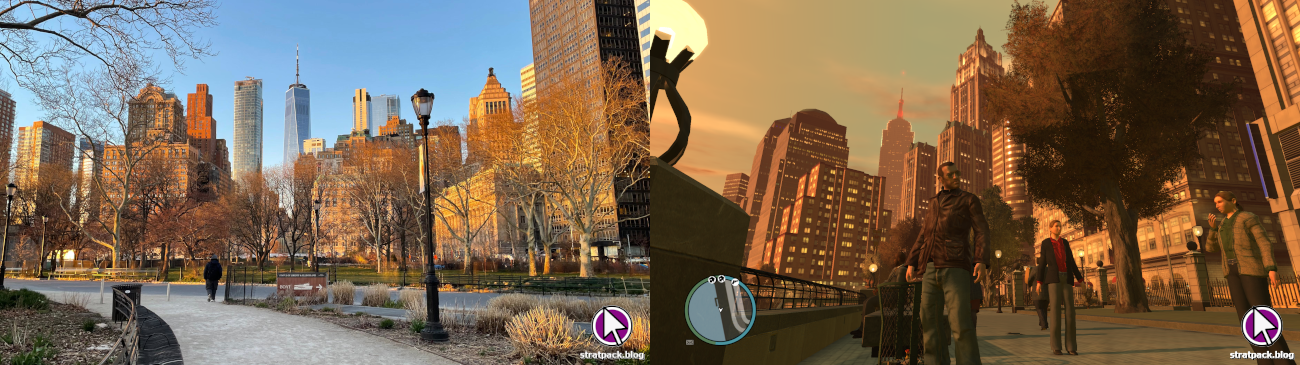
It also helps that there is plenty of colour to be found in particular locations and at certain times of day. I donât think itâs ever specified what time of year the game takes place at, but to me it all feels quite autumnal (the pedestriansâ attire, featuring a lot of long sleeves, longer coats, and the occasional hat, along with Nikoâs breath misting at night, supports this theory) – especially when the sun sets and the orange light is brightest against the skyscrapers.
Taking to the streets
Liberty City is best enjoyed when you resist the temptation to race around like a psychopath, hijacking cars and murdering the locals without a second thought. Taking time to amble along the sidewalks and travel by taxi and subway makes it easier to appreciate the level of detail with which Rockstar has adorned the city. Many of the more subtle elements would be easily missed when flashing past at 90 miles per hour, even if you would still feel their cumulative effect.
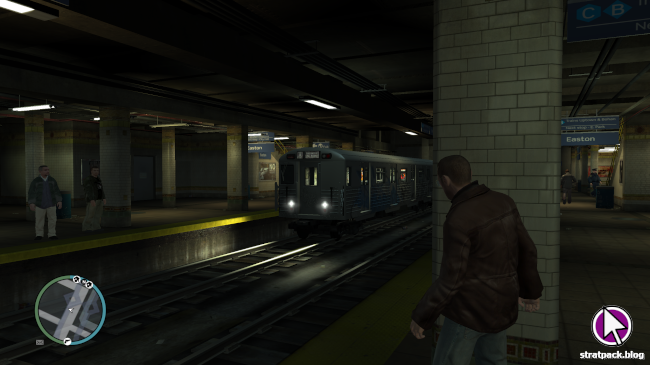
Stopping on a corner to observe your surroundings will reveal all kinds of authentic touches. Steam rises from the manhole covers (side note: I recently learnt that this is because many buildings in New York are still heated by high-pressure steam from pipes), traffic lights swing from their posts – especially in the occasional stormy weather – and leaves drift slowly to the ground.
Thereâs also a hefty amount of grime to Liberty City – not just literal dirt, but trash and boxes littering the pavements, scaffolding and building materials blocking pedestrian paths, and half-peeled stickers and posters pasted over every surface. Even in the cityâs more affluent districts youâre never far from reality, with homeless encampments filling the spaces between the high-rise offices.
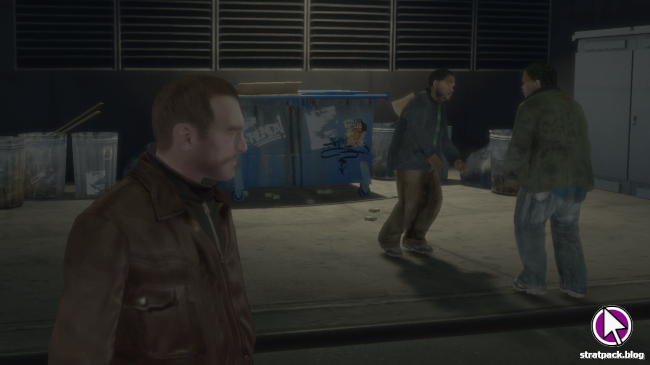
Real-life New York feels as though there is life on all sides of you, and Liberty City replicates that as closely as any game before or since. Even in 2024, the games industry has neither the tech nor the budget to recreate the cityâs verticality over such an area – skyscrapers will probably always be large, textured cuboids with few interiors in games of this scope. But Rockstarâs magnum opus is so vibrant at street level that you could swear each building must be inhabited.
Meeting the locals
Of course, any city is only as great as the people who live within it, and Liberty City is no exception. GTA IV took a big technical step forward with its pedestrians, who are randomised in appearance and display just us much variety as youâd expect in a real cross-section of New York residents. Exploring the streets, youâll encounter everybody from homeless bums to Wall Street executives.
Adding to the illusion of a real city populace are all the things that Liberty Cityâs denizens can do. At a basic level, NPCs can carry a range of objects: coffee cups, mobile phones, newspapers, cameras, food, shopping bags, and so on. Where appropriate, theyâll also interact with these objects – for example, sending text messages, taking photos of the sights, or taking a bite of their hot dog.
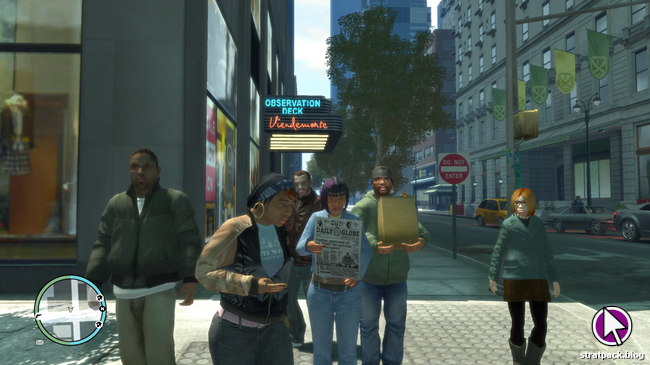
Then there are more complex activities. Certain people will hang about smoking, order food from the same vendors Niko can buy from, or jog through the cityâs parks. Itâs not uncommon to see those lucky enough to have found gainful employment cleaning windows, sweeping the sidewalks, or watering plants, and the occasional busker playing the saxophone can be quite atmospheric.
All this is to say that, unlike many virtual cities that came before it, itâs very rare to see the same person twice in Liberty City. There are too many permutations to the NPC generation algorithm, which also adds variety by tailoring pedestrians to particular areas. From the regular Joe strolling Middle Park to the affluent woman dragging her haul through the shopping district, it all builds a true sense of place.
Stopping to chat
That effect could have been ruined very easily when pedestrians opened their mouths to speak. Traditionally, video game NPCs emit âbarksâ – isolated lines, yelled at random. Rockstar evidently wasnât content with that, and GTA IVâs background cast was blessed with a slightly higher degree of intelligence.
Chief among the simple but effective tricks here is that NPCs can have extremely simple conversations. This occurs either when they get together on the streets or when they answer phone calls, and usually consists of a detailed statement followed by a basic positive or negative response. For example, NPC #1 might say heâs enjoying a certain drug, and NPC #2 will agree. Or NPC #1 might make a sexual comment about NPC #2, who could react angrily and call him out.
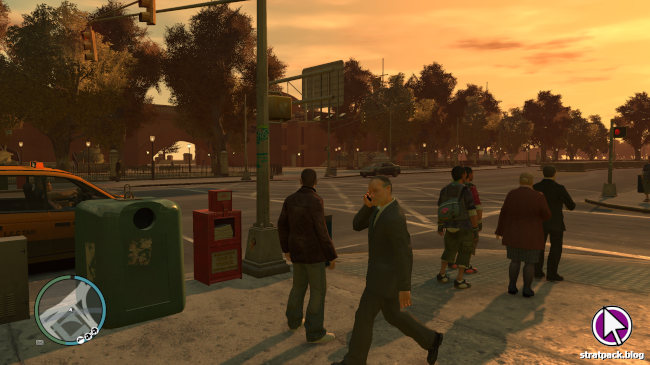
It doesnât always flow perfectly (and was likely kept simple due to hardware limitations), but again the mechanicâs effectiveness is boosted by awareness of context. For example, the aforementioned conversation about drugs is more likely to occur in rougher areas of Liberty City, while Downtown you might hear business discussions (âMark my words, Sprunk shares are going to go through the roofâ/âI better make a call!â or âWhy doesnât this company outsource?â).
The best contributors to Liberty Cityâs illusion of life are the lines that could almost be stored in a time capsule from 2008, which either reference the concerns of the time or reflect the fledgling Starbucks-and-beanie-hats hipster movement that would eventually take hold in the 2010s (at least in London). Some of the more memorable quotes I jotted down from passers-by on my travels included:
- âYou canât smoke no place in this fuckinâ city no moreâ
- âThis countryâs gotten really fascist since the attacksâ
- âThis is, like, global warming – totallyâ
Right words, right action
Liberty City is a delight to look at and to listen to, but what is it like to exist in? One of the things I love about the city is that it feels like it has a life of its own that would continue whether Niko was there or not, but GTA IV is a game, after all, and that means it also needs to be fun for the player to interact with.
Iâve previously written about this at some length, but this is another area in which GTA IV excels, even compared to Rockstarâs more recent efforts. Rather than driving the player in a certain direction, Liberty City simply presents them with a series of tools and rules and lets them decide how to test the systemâs limits.
This leads to a much more organic and spontaneous experience. As an example, when I was wandering the city researching this article, I saw a pedestrian get hit by a car. He got up, brushed himself off, and hauled the driver out of his vehicle to challenge him to a fight. I watched as the two chased each other up the street and round the corner, all without any instigation or input from Niko at all.
This wouldnât work if the systems underneath werenât so well thought out. However, everything is so finely balanced that – with the exception of sometimes dropping their coffee cups a little too easily – people usually react in proportion to what Niko does. Compare this to GTA V, where NPCs will become aggressive towards the player character for nothing more than standing in their vicinity, and you can see a clear difference in Rockstarâs design philosophy in 2008 and 2013.
A work of modern art
GTA IV was released at a time when the âgames as artâ discussion was at its peak. The industry was attempting to escape its categorisation as a maker of childrenâs playthings and convince the wider world to take it more seriously – partly to earn adequate praise for its productsâ artistic merit, and partly to avoid censorship at the hands of the like of people like Jack Thompson.
What is art? There are whole books out there on this question, and experts who could go into far more nuance than me. But I would posit that we see art praised when it succeeds at capturing a part of human existence – perhaps a particular person, era, place, or emotion. The best works transcend time, mirroring their muses and evoking the same feelings in those who observe them years later.
GTA IV is, of course, a Grand Theft Auto game. At its heart are mechanics that enable random violence, a campaign featuring endless shooting galleries, and crude dialogue full of swearing and potentially offensive remarks. Those facets are what the series will always be known for, and give it the mass appeal that brings in the money to allow Rockstar to invest in building such intricate worlds.
But under the surface, GTA IV is so much more. Liberty City is an interactive time capsule, a condensed recreation of mid-2000s New York with more accuracy and soul than anything else out there. It has never been topped, even as budgets have bloated and technology has evolved. Rockstar really set out to prove what was possible with GTA IV, and in doing so, they built something truly special.
[ad_2]
GTA IV’s Liberty City is still the best virtual city ever made